
FOR IMMEDIATE RELEASE
Agronomists Share Top 10 Corn Seed Questions
The answers can help growers get the right seed on the right acre.
WESTFIELD, Ind. (Feb. 18, 2025) – Growers ask their agronomists a lot of questions about corn seed — and that’s a good thing.
Getting seed placement right requires the discussion of many factors — from soil types to yield goals to management styles. Working through those questions and drawing on agronomists’ extensive product knowledge can make a big difference in profitability.
The most important question, according to LG Seeds Agronomist Steve Crafton, is how to optimize seed placement field by field. “Getting the right seed on the right acre can add bushels,” he says. Answering the following questions can help growers place seed right.
1. What are your yield goals for a field?
What’s your top-yielding corn hybrid? That’s the question LG Seeds Agronomist Shane Irlbeck gets most often, but it sparks a whole new line of questioning that dives into the nitty-gritty of what that grower is seeking.
“Knowing a grower’s yield goals and expectations for each field helps us get a better idea what seed will best fit that piece of ground,” Irlbeck explains.
2. What’s your management style?
A seed choice should fit a grower’s management style — whether they’re in fields every day or prefer a corn seed that requires less monitoring. Some products do best when nitrogen is applied up front; others thrive when they are spoon-fed nutrients throughout the season.
“We have products well suited for either end of the spectrum and everywhere in between,” Irlbeck says. “Aligning those choices to a grower’s management style is important.”
3. What’s your soil type?
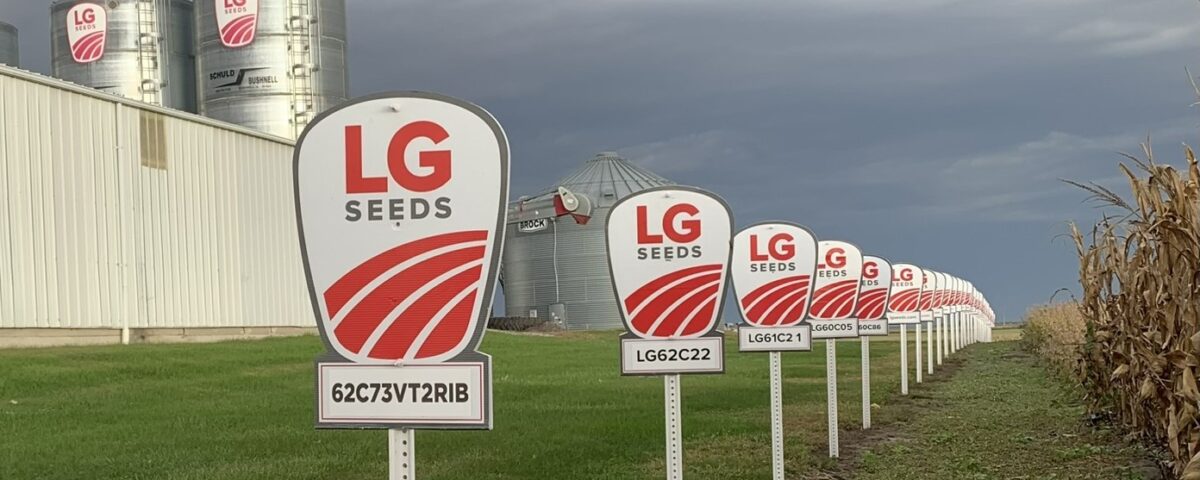
With LG Seeds’ PCR trials, corn seed products benefit from a few more years of testing before they are distributed to growers. Any seed that makes the LG Seeds bag has been proven in these trials.
Across the Midwest and even within fields, there are many different soil types. “If you have heavier, wetter soils, you need corn seed that can handle that situation,” Crafton says. “A poor product match can result in disease pressure and yield loss.”
4. Have you thought about populations?
Crafton says the optimal planting population depends on soil type, the grower’s fertility plans and the seed — specifically, how it flexes its ears. Growers can work with their local agronomists to determine the best seeding rate for their fields.
5. What disease tolerances do you need?
In recent years, Irlbeck has received many questions about disease ratings. “In 2024, tar spot moved into some areas of Minnesota for the first time,” Irlbeck says. Managing that yield-robbing disease is a major concern heading into 2025.
“The first line of defense for tar spot is a tolerant corn seed like LG58C73 or LG59C72,” Irlbeck says. “We have great tar spot options throughout our lineup.”
Tar spot, northern corn leaf blight and gray leaf spot top Crafton’s list of concerns for Illinois. Growers should take a proactive approach to these diseases, taking stock of their threats and incorporating disease ratings in seed choices.
6. What pest protections do you need?
Corn rootworm is also top of mind for Irlbeck’s growers. “We have options from SmartStax® PRO to conventional, with DuracadeViptera™ and SmartStax® and VT Double PRO®, along with AgrisureViptera® traits,” he says.
Determining the best corn seed solution for corn rootworm requires digging a little deeper, looking into what crop rotation growers have used and the level of pressure, Irlbeck says.
7. Are weed issues likely?
Growers dealing with weed issues should also think through their chemistry options with various seed choices in case a rescue treatment is needed. “If weeds are an issue, growers may want to consider an option like SmartStax or POWERCORE® so they can come in with a Liberty® rescue treatment,” Crafton explains.
8. What maturities do you plan to use?
Corn maturities should also come into play. The 2024 growing season drove this home, with corn and soybeans drying down fast, resulting in some phantom yield loss and shattering, Crafton says.
“We simply can’t harvest everything at the same time. Planting a mix of maturities spreads your risk and allows you to capture more bushels,” Crafton says. “I like a four- to five-day spread in maturities. It lengthens that pollination window out and helps at harvest.”
Logistics also come into play. Irlbeck points out a grower will likely plant something different in a high-fertility field located right next to the grain dryer versus one that’s 20 miles away that will largely dry down in the field before being trucked to the elevator.
9. Is it proven?
“Growers get tired of switching seed every few years,” Crafton says. “They are more comfortable sticking with seed they’ve used before.”
LG Seeds’ pre-commercial research (PCR) trials provide that with an extra year or two of testing. That gives growers the confidence to incorporate some of those new products.
10. How does LG Seeds compare?
Another common question is how LG Seeds compares to other companies. “In many cases, I can run side-by-sides and show growers just how we stack up to the competition,” Irlbeck says. “LG Seeds’ advantage is our ability to place seed in a way that gets the most yield potential out of them.”
To make that happen, LG Seeds agronomists meet with growers throughout the year to understand their unique needs and goals so they can capture the most bushels possible from each acre. Reach out to your local LG Seeds agronomist to optimize your seed plans.
###
Contacts:
Ashley Davenport | Ashley.Davenport@AgReliantGenetics.com | 574-780-0203
Julianne Johnston | jjohnston@morganmyers.com | 319-233-0502
The information and statements contained in this release are merely for informational and educational purposes and do not guarantee future performance.
ALWAYS READ AND FOLLOW IRM, WHERE APPLICABLE, GRAIN MARKETING AND ALL OTHER STEWARDSHIP PRACTICES AND PESTICIDE LABEL DIRECTIONS.
The LG Seeds Design and AgriShield are registered trademarks of AgReliant Genetics, LLC.
©2025 AgReliant Genetics, LLC.


