
FOR IMMEDIATE RELEASE
2024 Was a Wild Ride for Many Corn Farmers
AgriGold agronomists share how crops around the U.S. fared and some of the big takeaways.
WESTFIELD, Ind. (Oct. 30, 2024) – Crazy. Chaotic. Extremes. Those three words were used by AgriGold agronomists in Illinois, Louisiana and Iowa, respectively, to describe the 2024 growing season. Some corn fields shined; others struggled. As with any season, lessons were learned. These agronomists share their biggest takeaways.
Illinois and Missouri: Tar spot hit early; farmers’ proactive response was a positive
“It was a crazy planting season. And it has been a crazy fall, too,” says AgriGold Agronomist Brett Leahr, whose territory stretches from eastern Missouri to central Illinois. “I don’t know if it’s because we essentially have three crops out there due to the extended planting season, but this year seems never-ending.”
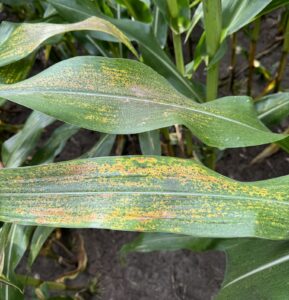
Tar spot moved into Illinois early, forcing farmers to adjust management plans on the fly.
Initial harvest results have been surprisingly strong considering the wet start and the late switch to hot and dry. The verdict is still out on later-planted corn, and Leahr warns there could be some harvestability issues given the late-season drought stress.
The wet weather early on led to some weed control struggles. It also set the stage for the early onset of disease. Tar spot moved in unusually early.
Farmers were proactive with their response, which Leahr says was likely a contributing factor to some of the strong early corn yields. “Their fungicide applications helped respirate the crop and slowed it down a bit, helping to build kernels.”
In central Illinois, tar spot is a known issue that’s managed each year. But other areas, like eastern Missouri and western Illinois, are experiencing the disease for the first time. Leahr says farmers should focus on three things for managing tar spot:
- Hybrid tolerances
- Soil fertility
- Fungicide efficacy
“There are no hybrids resistant to tar spot, but there are different tolerance levels,” he details. Similarly, he says fungicides have varying impacts on tar spot.
Soil fertility also has an impact on the rate of infection and how the plant responds when it gets sick, according to Leahr. He likens balanced soil fertility to grease on a wheel. “The wheel just seems to turn a bit smoother and easier.”
Iowa: Corn yields ran the gamut in western Iowa
Extremes marked the 2024 season for AgriGold Agronomist Jeff Morey who covers the western two-thirds of Iowa. “The weather was a huge factor in how much yields varied from north to south across my territory,” he says. “We had too much water up front and not enough water on the back side of the season,” Morey explains, adding that some areas were harder hit than others.
The southern third of Morey’s territory is generally bringing in phenomenal yields averaging between 270 bushels and 300 bushels an acre. The region had fewer struggles with wet weather during planting and caught a few timely rains during the July through September dry spell. Well-timed herbicide and fungicide applications also helped their case.
The northern third of western Iowa is generally yielding in the 140- to 170-bushels-an-acre range, on average. That area of the state battled standing water and drowned-out fields in the spring. Then, the spigots turned off mid-July. A rare infestation of southern rust in August added to crop woes in the northwest tier of Iowa, bringing the growing season to an abrupt stop.
As farmers begin making seed decisions for 2025, Morey encourages them to pay attention to the specifics of any performance data. “I’m a proponent of looking at plots, but you need to be aware of what areas the data is coming from and what sort of conditions were at play,” he says. He encourages farmers to look at multiple plots across multiple environments.
South: Active weather pattern kept farmers on their toes
Southern corn-producing areas also faced wet weather early in the growing season and bouts of heat and dryness. “We battled active weather patterns, a drought and then two hurricanes,” says AgriGold Agronomist Chris Ouzts.
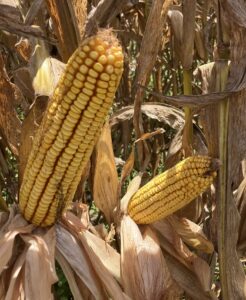
A645-22 has always been a good hybrid, and this year it really shined, coming in as one of the top three performers in southern field trials.
A wet spring made timely planting a challenge, but after that, farmers had smoother sailing. Conditions turned dry, but most farmers in Ouzts’ territory can mitigate that with irrigation.
The hurricanes blew in southern rust, with areas near the Mississippi River particularly hard-hit, as well as a flight of aphids. Some areas of Kentucky and Louisiana also faced straight-line winds that resulted in greensnap.
Despite an assortment of localized challenges, corn yields were decent across Ouzts’ southern territory, with areas farther to the north, like the Kentucky Bootheel and into Missouri, pulling up the average thanks to milder temperatures.
Looking ahead to 2025
Costs and cash flow are top of mind for farmers as the season winds down. As they weigh hybrid decisions, Leahr encourages farmers to look at multiple years of performance data when possible.
“It’s easy to get emotional when there are some truly impressive performers,” Leahr says. “But it’s best to look for consistency over multiple years. Don’t necessarily knock a product out of the lineup if it’s not your top performer but it has been consistent year after year.”
For support choosing the right hybrid for every acre — from your most challenging to your best — reach out to your local AgriGold agronomist.
###
Contacts:
Ashley Davenport | Ashley.Davenport@AgReliantGenetics.com | 574-780-0203
Julianne Johnston | jjohnston@morganmyers.com | 319-233-0502
The information and statements contained in this release are merely for informational and educational purposes and do not guarantee future performance.
ALWAYS READ AND FOLLOW IRM, WHERE APPLICABLE, GRAIN MARKETING AND ALL OTHER STEWARDSHIP PRACTICES AND PESTICIDE LABEL DIRECTIONS.
AgriGold® and Design® and Field GX™ are trademarks of AgReliant Genetics, LLC.
©2023 AgReliant Genetics, LLC.


