

FOR IMMEDIATE RELEASE
Unpacking and Correcting Soil Compaction
Problems piling below ground cause farmers yield loss above.
WESTFIELD, Ind. (Feb. 3, 2025) – From mild winters to heavier equipment, farmers face several uncontrollable factors, adding layers to the soil compaction problem.
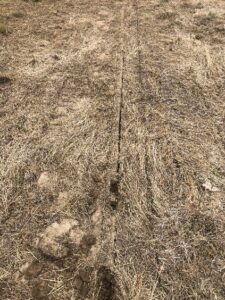
Planting into wet soils resulted in sidewall compaction.
“Our winters have been milder, and snowfall has been lighter in recent years, so we’re not getting as much breakup of soil compaction as we used to,” says LG Seeds Agronomist Kyle Malcolm, who is based in Indiana. “And our equipment continues to get bigger and heavier.”
The resulting soil compaction that occurs as air and pore space in the ground diminishes makes the soil denser and more difficult for water or nutrients to pass through.
“The corn roots can’t penetrate and reach any moisture or nutrients farther down,” Malcolm says. “Without a strong root foundation, crops are weaker, vulnerable to stressors like pests or disease and more prone to yield loss.”
Fortunately for farmers, Malcolm says there are multiple management strategies they can utilize and a few extra precautions they can take.
Purposeful tactics and traffic
Understanding your soil conditions lays the groundwork for managing compaction. Farmers should start by considering how often and when they work the soil.
“Limiting the number of passes with heavy equipment can minimize compaction,” Malcolm states. “So, if you are going to be in the field, make sure you’re doing something positive, whether that’s working the ground to prepare a good, solid seedbed or you’re breaking up compaction. We don’t need to be working the ground just to work the ground.”
He encourages farmers to ensure weather and soil conditions are right before heading into the field to avoid creating deeper compaction layers. “If it’s a little wet, you’re going to see all your sins for the year,” Malcolm says. “If field conditions are not right or too wet, tillage could do more harm than good.”
Promote soil health
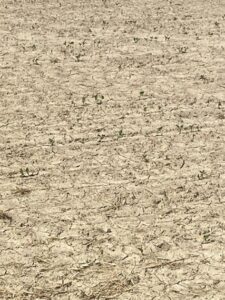
Waterlogged soil led to crusting and compaction in this field.
Before making a pass in the field, farmers should test soil, assess fields for standing water or ponding, and decide what actions are needed to improve the soil’s overall health and structure.
“Make sure you’ve got your nutrients in line,” Malcolm says. “Calcium and magnesium are a big piece, and if that’s in balance, you’ll be on your way to healthier soil.”
Farmers can implement additional strategies to address soil compaction in the long term. “Drainage makes a big difference in allowing the soil to breathe,” Malcolm says. “Or cover crops can break up hardpan and create channels for water to pass through.”
With a focus on soil health, Malcolm says farmers can improve soil compaction and set their ground up for success in future seasons.
Strategic seed selection
Picking the right seed for every acre is crucial, so know your ground and choose hybrids well suited for it.
“If you know you’re going to be planting into heavier soils or more challenging conditions, work with your local agronomist to choose a stronger, deeper-rooted corn product that can penetrate compaction,” Malcolm says. “What’s important for farmers is picking a product that works in their unique situation.”
Farmers looking for recommendations on hybrid selection, soil testing or other crop management concerns can reach out to their local LG Seeds agronomist.
###
Contacts:
Ashley Davenport | Ashley.Davenport@AgReliantGenetics.com | 574-780-0203
Julianne Johnston | jjohnston@morganmyers.com | 319-233-0502
The information and statements contained in this release are merely for informational and educational purposes and do not guarantee future performance.
ALWAYS READ AND FOLLOW IRM, WHERE APPLICABLE, GRAIN MARKETING AND ALL OTHER STEWARDSHIP PRACTICES AND PESTICIDE LABEL DIRECTIONS.
The LG Seeds Design and AgriShield are registered trademarks of AgReliant Genetics, LLC.
©2025 AgReliant Genetics, LLC.


