
FOR IMMEDIATE RELEASE
Limit the Impact of Ear Rot and Mold
AgriGold agronomists say scouting for mold can save farmers a lot of trouble down the road
WESTFIELD, Indiana (Oct. 10, 2022) – “Ear molds are a possibility every year,” says AgriGold Agronomist Leslie Lloyd, and those storing corn on-farm need to know if they have mold before harvest. “You certainly wouldn’t want to contaminate a 60,000-bushel bin with 5,000 bushels of corn from a hot spot,” Lloyd cautions.
Iowa has plenty of hot spots this year, warns Ron Roling, an AgriGold agronomist in the state. “It has been a long time since we’ve had to address ear mold on this wide of a scale,” he says, noting reports stretching from southeast Iowa to southern Minnesota. “I think it’s a bigger deal than most farmers realize.”
Check stressed areas of fields before combines roll
“Prior to harvest, you should shuck back 100 ears to check for mold,” Lloyd says. “Don’t pull them all from one place. I would shuck 20 ears and look for mold from five different places in the field, targeting the most stressed areas and hillsides. If more than 15% of the ears are infected, it’s cause for worry.”
Corn-on-corn acres have higher chances of mold due to inoculum, Lloyd says. He continues, “The second most likely place for ear molds are fields that were stressed, whether that’s due to dry weather or poor pollination.”
Molds typically need some help getting into ears, whether that’s severe thunderstorms, hailstorms or pests like corn earworms. “The No. 1 source for ear molds is corn earworm,” Lloyd says. “They damage the tips of the ears, which allows mold to enter the husk.”
Farmers looking to protect themselves against corn earworm damage should consider a hybrid with the Agrisure Viptera™ trait. “This is the absolute best way to fight corn earworm,” according to Lloyd.
Prevent mold from spreading
“If you have ear molds, regardless of the type, harvest early. They’re not going to get better, nor will fungicides help. Harvest those problem fields first and send that grain straight to town. Keep your better grain in your on-farm storage,” Lloyd recommends. “Grain elevators can handle moldy corn better and have better blending capabilities. You don’t want to magnify your problems by handling it on-farm and not having enough cool, dry grain to blend.”
If you plan on storing such grain on-farm, Roling recommends “drying and cooling it as fast as you can because the mold will continue growing in the bin if you keep that grain warm and wet. And of course, try not to put it in bins that came from fields without any mold. The main thing is knowing what you have when you get to the bin side of things.”
Identifying Aspergillus and Gibberella
It’s important to know what type of ear mold you have. The two big ones are Aspergillus flavus and Gibberella, according to Lloyd.
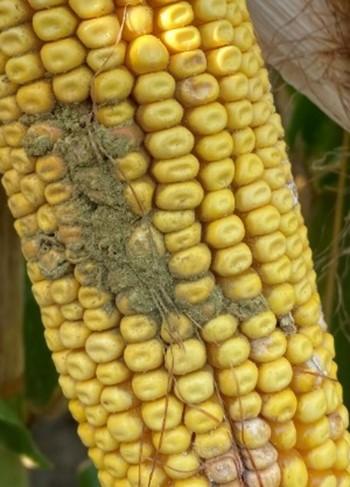
Aspergillus flavus is associated with heat and dryness and tends to favor southern areas. Lloyd explains the aflatoxins associated with the drab, olive green and dusty mold can lead to load rejections since it’s a carcinogen.
Roling is more familiar with the pink mold caused by Gibberella that’s more common in the Upper Midwest. It’s associated with vomitoxins that are injurious to animals.
Grain quality and storability are concerns with other ear rots like Diplodia and Fusarium, but they are not subject to rejection.
Making smart hybrid choices
“Molds usually need an invitation like a roughed-up husk to enter the plant,” according to Lloyd. Therefore, he says farmers looking to limit their risk of ear molds should select hybrids with long, tight husks rather than loose, open ones. “Any hybrid that is recommended for corn-on-corn tends to handle diseases better in general,” he adds.
The other consideration is whether the corn ear turns down earlier in the season. He elaborates, “An upright ear with an open husk will catch rain, and that leads to problems.”
Check with your AgriGold agronomist for the latest on disease tolerance, including ear rots. They are committed to helping you maximize both the size and quality of your crops – from planting to harvest to bin.
###
ABOUT AGRIGOLD
AgriGold offers unique hybrids paired with the latest agronomic knowledge and data to achieve exceptional crop performance, year after year. Based in Westfield, Indiana, AgriGold is for the farmer who wants a true seed partner that is an ally in the field. For more information, visit AgriGold.com and follow us on Facebook, Twitter, Instagram and LinkedIn.
About AgReliant Genetics
AgReliant delivers one-of-a-kind, high-performing hybrids farmers can’t get anywhere else. Regardless of the brand on the bag – AgriGold®, LG Seeds or PRIDE® Seeds – count on AgReliant Genetics for unique, diverse genetics with formidable yield and multiple trait options. Our seed-only focus opens new innovation for our brands and for our farmer customers, whether they grow corn, soybeans, sorghum or alfalfa. Learn more at AgReliantGenetics.com.
###
Contact:
Amanda Fruland, Amanda.Fruland@agreliantgenetics.com


